
Introduction
Technology is no longer something that exists only in offices, factories, or research labs. In 2026, artificial intelligence (AI), the Internet of Things (IoT), and automation have become deeply embedded in everyday life. From the moment people wake up to the time they go to sleep, intelligent systems are working quietly in the background to make life more efficient, comfortable, and connected. These technologies are reshaping how we live, work, travel, communicate, and even take care of our health.
Rather than replacing humans, AI, IoT, and automation are increasingly designed to assist, support, and enhance daily experiences. Together, they form a powerful ecosystem that adapts to human behavior, learns preferences, and simplifies routine tasks. This transformation is not futuristic anymore—it is happening now, redefining modern living in profound ways.
Understanding the Connection Between AI, IoT, and Automation
AI, IoT, and automation are closely interconnected technologies that work best when combined. AI provides intelligence and decision-making capabilities, IoT enables devices to collect and share data, and automation executes tasks with minimal human involvement. In daily life, this combination allows systems to sense environments, analyze information, and take action in real time.
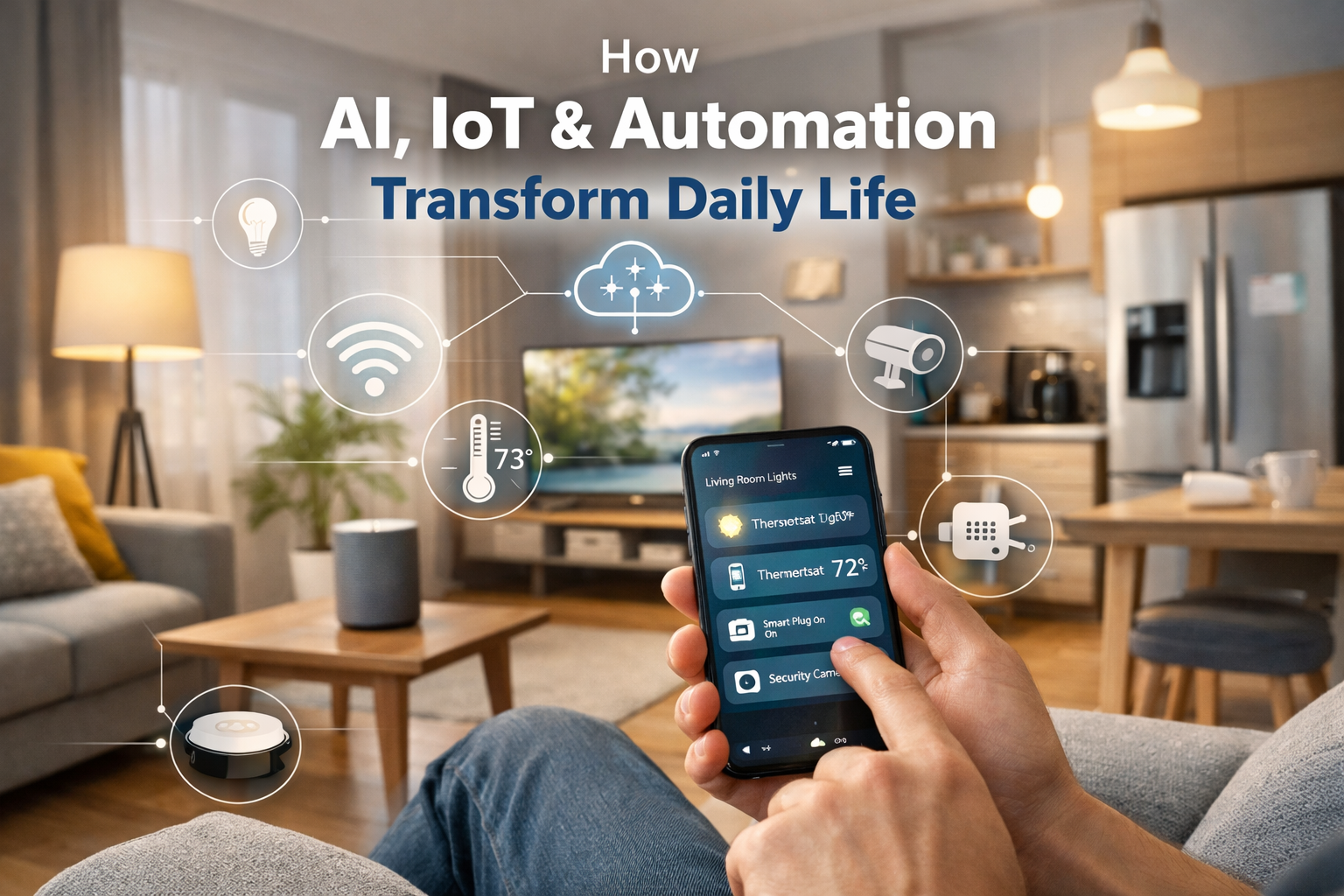
For example, a smart home uses IoT sensors to monitor temperature and energy usage, AI to learn user preferences, and automation to adjust settings automatically. This seamless collaboration between technologies creates smarter environments that respond intuitively to human needs.
Smart Homes and Intelligent Living Spaces
One of the most visible impacts of AI, IoT, and automation is in smart homes. In 2026, homes are equipped with interconnected devices that manage lighting, climate control, security, and entertainment. Smart thermostats adjust temperatures based on occupancy and weather patterns, while intelligent lighting systems adapt to time of day and activity levels.
AI-powered voice assistants act as central hubs, allowing residents to control devices through simple commands. Automation ensures that daily routines, such as locking doors, turning off lights, or starting appliances, happen effortlessly. These technologies not only enhance comfort but also improve energy efficiency and home security.
Personalized Health and Wellness Management
Healthcare and wellness have undergone a major transformation thanks to AI, IoT, and automation. Wearable devices continuously monitor physical activity, heart rate, sleep patterns, and stress levels, providing real-time insights into personal health. IoT-enabled medical devices share data securely with healthcare providers, enabling remote monitoring and early detection of potential health issues.
AI analyzes health data to offer personalized recommendations for exercise, nutrition, and lifestyle changes. Automation supports medication reminders, appointment scheduling, and health tracking, empowering individuals to take a proactive role in managing their well-being. These advancements make healthcare more accessible, preventive, and personalized.
Smarter Transportation and Mobility
Daily transportation has become more efficient and safer through intelligent systems. AI-driven navigation apps analyze traffic patterns, weather conditions, and road data to provide optimal routes in real time. IoT sensors embedded in vehicles and infrastructure communicate to improve traffic flow and reduce congestion.
Automation is transforming mobility with features such as adaptive cruise control, self-parking, and semi-autonomous driving. Public transportation systems also benefit from these technologies, using data-driven insights to optimize schedules and reduce delays. Together, AI, IoT, and automation are making daily commutes smoother and more predictable.
Workplace Efficiency and Daily Productivity
The modern workplace has been reshaped by intelligent technologies. In 2026, AI-powered tools assist with scheduling, data analysis, communication, and decision-making. Automation handles repetitive tasks such as data entry, report generation, and workflow management, allowing employees to focus on creative and strategic work.
IoT devices support smarter offices by monitoring space usage, optimizing energy consumption, and enhancing safety. Remote and hybrid work environments benefit from AI-driven collaboration tools that improve productivity and reduce friction in daily operations. As a result, work becomes more flexible, efficient, and balanced.
AI-Powered Shopping and Consumer Experiences
Shopping has become a highly personalized experience thanks to AI and IoT. Online platforms use AI algorithms to analyze browsing behavior, purchase history, and preferences to recommend relevant products. Smart retail environments leverage IoT sensors to track inventory, improve store layouts, and offer real-time promotions.
Automation streamlines order processing, payments, and delivery logistics, making shopping faster and more convenient. From personalized discounts to automated customer support, these technologies enhance satisfaction while reducing effort for consumers and businesses alike.
Connected Kitchens and Smart Appliances
Everyday household tasks are being simplified through smart appliances powered by AI and IoT. In modern kitchens, connected refrigerators track food inventory, suggest recipes, and notify users when items need restocking. Smart ovens adjust cooking settings automatically based on recipes and food types.
Automation ensures appliances operate efficiently, saving time and energy. These innovations transform routine chores into seamless experiences, allowing individuals to focus on what matters most rather than managing daily tasks manually.
Enhanced Security and Safety Systems
Home and personal security have been significantly improved through intelligent technology. AI-powered surveillance systems can distinguish between normal activity and potential threats, reducing false alarms. IoT-enabled sensors monitor doors, windows, and motion, providing real-time alerts through mobile devices.
Automation allows security systems to respond instantly, such as locking doors or notifying authorities when unusual activity is detected. These advancements create safer living environments and offer peace of mind without constant monitoring.
Entertainment and Leisure Experiences
AI, IoT, and automation have transformed how people relax and enjoy entertainment. Streaming platforms use AI to personalize content recommendations based on viewing habits and preferences. Smart entertainment systems synchronize audio, lighting, and visuals to create immersive home theater experiences.
Gaming, music, and virtual experiences are enhanced through adaptive AI that responds to user behavior. Automation ensures seamless transitions between activities, making leisure time more engaging and enjoyable.
Sustainability and Energy Efficiency in Daily Life
Sustainable living is increasingly supported by intelligent technology. AI analyzes energy consumption patterns to reduce waste, while IoT-enabled smart grids balance energy demand and supply more efficiently. Automated systems manage lighting, heating, and appliances to minimize environmental impact.
In daily life, these technologies help individuals make eco-friendly choices without sacrificing comfort. Sustainability becomes a natural part of everyday routines rather than an added effort.
Challenges and Ethical Considerations
Despite the benefits, the widespread adoption of AI, IoT, and automation raises important concerns. Privacy, data security, and ethical use of technology remain critical issues in 2026. As devices collect vast amounts of personal data, ensuring transparency and user control is essential.
Balancing convenience with responsibility requires strong regulations, ethical design, and informed users. Addressing these challenges will determine how positively these technologies continue to shape daily life.
The Human Role in an Automated World
While technology handles many tasks, human creativity, empathy, and judgment remain irreplaceable. AI, IoT, and automation are most effective when they complement human abilities rather than replace them. In daily life, these technologies free up time and mental space, allowing individuals to focus on relationships, creativity, and personal growth.
The future of daily living lies in collaboration between humans and intelligent systems, creating environments that support well-being and purpose.
Conclusion
AI, IoT, and automation are fundamentally transforming daily life by making it more connected, efficient, and personalized. From smart homes and healthcare to transportation, work, and entertainment, these technologies enhance convenience while supporting sustainability and well-being. What once felt futuristic is now an integral part of everyday routines.
As these innovations continue to evolve, their impact on daily life will deepen. By embracing intelligent technology thoughtfully and responsibly, individuals can enjoy a future where technology works seamlessly in the background, enriching life without overwhelming it.