
Introduction
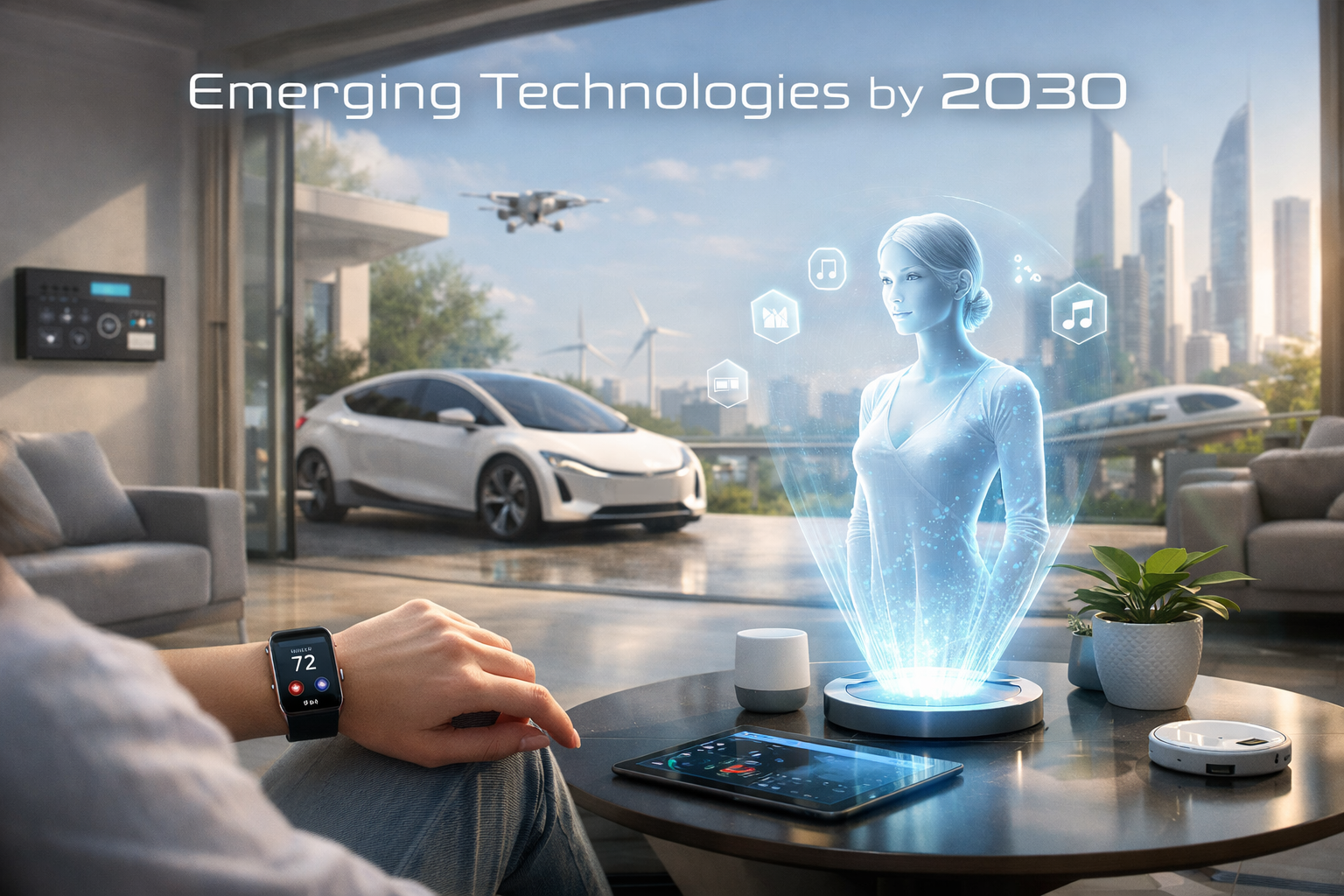
Technology is advancing faster than ever, and by 2030, emerging innovations will dramatically reshape how people live, work, communicate, and interact with the world around them. What once seemed futuristic is steadily becoming part of everyday life, influencing homes, workplaces, healthcare, transportation, and entertainment. These technological shifts are not only changing individual experiences but also redefining global systems and lifestyles.
Understanding the emerging technologies expected to redefine daily life by 2030 helps individuals and businesses prepare for a future driven by intelligence, automation, and connectivity. These advancements will focus on efficiency, personalization, sustainability, and human-centered design, making everyday activities more seamless and integrated.
Artificial Intelligence as a Daily Companion
By 2030, artificial intelligence will function as an invisible yet essential part of everyday life. AI-powered systems will assist with scheduling, decision-making, health monitoring, and personalized recommendations across devices and platforms. Rather than reacting to commands, AI will anticipate needs based on behavior and context.
From smart assistants managing households to AI-enhanced productivity tools at work, everyday tasks will become more efficient. AI will also support creativity, education, and problem-solving, helping people focus on higher-value activities.
Smart Homes Becoming Intelligent Ecosystems
Smart homes will evolve into fully integrated ecosystems by 2030. Connected appliances, lighting, climate systems, and security tools will communicate with each other to optimize comfort, energy efficiency, and safety.
These intelligent environments will adapt to user preferences automatically, reducing energy consumption and improving convenience. Smart homes will no longer require constant manual control, instead operating seamlessly in the background.
Wearable Technology Advancing Health and Wellness
Wearable devices will move beyond fitness tracking to become comprehensive health companions. By 2030, wearables will continuously monitor vital signs, detect early symptoms of illness, and provide real-time health insights.
Integration with healthcare systems will enable remote monitoring and personalized treatment plans. This shift will empower individuals to take a proactive approach to health and well-being, reducing reliance on reactive medical care.
Extended Reality Blending Digital and Physical Worlds
Extended reality, including augmented reality and virtual reality, will redefine how people learn, work, shop, and socialize. By 2030, immersive experiences will become more accessible and practical, integrating seamlessly into daily routines.
From virtual workspaces to interactive learning environments and immersive entertainment, extended reality will enhance engagement and interaction. These technologies will blur the boundaries between physical and digital experiences.
Autonomous Transportation and Smart Mobility
Transportation will undergo significant transformation by 2030. Autonomous vehicles and smart traffic systems will improve safety, reduce congestion, and enhance mobility in urban and rural areas.
Connected transportation networks will optimize routes and reduce emissions, supporting sustainable travel. As autonomous technology matures, commuting and logistics will become more efficient and environmentally friendly.
The Internet of Things Connecting Everything
The Internet of Things will expand rapidly, connecting everyday objects through intelligent networks. By 2030, devices across homes, cities, healthcare, and industries will collect and share data to improve efficiency and decision-making.
IoT-powered systems will enable smarter energy use, predictive maintenance, and real-time monitoring. This connectivity will create responsive environments that adapt to changing conditions and user needs.
Green Technologies Driving Sustainable Living
Sustainability will be a major focus of emerging technologies by 2030. Renewable energy solutions, smart grids, and energy-efficient systems will support a transition toward eco-friendly living.
Technology will enable individuals to monitor and reduce their environmental impact through intelligent energy management and sustainable resource usage. Green innovation will play a crucial role in addressing climate challenges.
Automation Transforming Daily Workflows
Automation will redefine how people work and manage daily responsibilities. Intelligent systems will handle repetitive tasks, scheduling, and administrative processes, freeing up time for creative and strategic activities.
Rather than replacing human roles entirely, automation will enhance productivity and efficiency. The future workplace will emphasize collaboration between humans and intelligent systems.
Biometric and Secure Digital Identities
Digital identity systems will become more secure and convenient through biometric technologies. By 2030, facial recognition, voice authentication, and behavioral biometrics will replace traditional passwords.
These systems will improve security across financial services, healthcare, and digital platforms while simplifying access. Trust and privacy will remain central to the adoption of biometric technologies.
Human-Centered Design and Ethical Technology
Emerging technologies will increasingly focus on human-centered design and ethical considerations. By 2030, technology development will prioritize accessibility, inclusivity, and transparency.
Ethical frameworks will guide how data is used and how systems interact with users. This approach will ensure that innovation enhances quality of life without compromising personal freedom or privacy.
Technology Empowering Lifelong Learning
Learning will become more personalized and continuous through emerging technologies. AI-powered platforms and immersive tools will support skill development at every stage of life.
By 2030, education will adapt to individual learning styles and career needs, enabling people to stay relevant in a rapidly changing job market. Lifelong learning will become a natural part of daily life.
Conclusion
By 2030, emerging technologies will redefine everyday life by making it more connected, efficient, and personalized. Artificial intelligence, smart environments, automation, and sustainable innovations will integrate seamlessly into daily routines, improving quality of life while addressing global challenges.
As technology continues to evolve, adaptability and responsible innovation will be key to maximizing its benefits. Embracing these emerging technologies with a human-centered approach will shape a future where technology enhances everyday experiences and supports long-term well-being.